
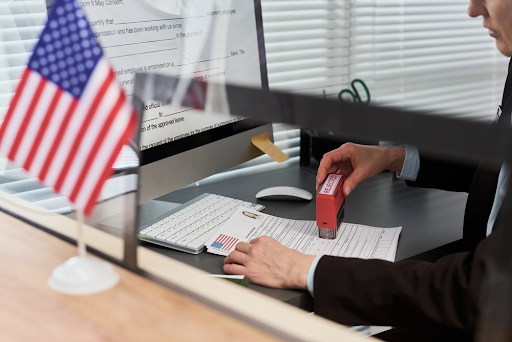
Consular processing is the way to get a green card from outside the United States. Once USCIS approves an immigrant petition, the case moves to the U.S. Department of State, and you attend an immigrant visa interview at a U.S. embassy or consulate abroad. If the visa is approved, you become a lawful permanent resident when a U.S. Customs and Border Protection officer admits you at the border.
It is one of two routes to permanent residence. The other, adjustment of status, lets eligible applicants finish the process without leaving the country. Below, we walk through each stage of consular processing and explain how to tell which route fits your situation.
Who Goes Through Consular Processing
Consular processing applies to anyone with an approved immigrant petition who completes the green card process abroad. Most applicants fall into one of three groups.
Applicants Living Outside the United States
This is the largest group. A spouse in Mexico, a parent in India or a skilled worker in Brazil cannot file for adjustment of status from abroad, so the immigrant visa interview is their only path. Their case moves from USCIS to the State Department as soon as the petition is approved.
Applicants in the U.S. Who Cannot Adjust Status
Some people already living in the United States are not eligible to adjust, often because they entered without inspection or fell out of status. USCIS requires these applicants to travel abroad and obtain an immigrant visa.
If they have built up more than 180 days of unlawful presence, leaving the country triggers a three-year or ten-year bar on returning unless a waiver is approved first.
Applicants Who Prefer to Apply Abroad
USCIS also allows people who live in the United States to choose consular processing. Some do this because the consulate in their home country moves faster than their local USCIS office, or because they plan to spend the waiting period abroad anyway. The choice should be made before filing, because it determines where USCIS sends the approved petition.
The Petitions That Start the Process
Family-based cases begin with Form I-130, filed by a U.S. citizen or permanent resident relative. Employment-based cases begin with Form I-140, filed by the U.S. employer, while certain investors may file Form I-526 for themselves. Whatever the category, consular processing only starts once that petition is approved.
The Consular Processing Steps, From Petition to Interview
The U.S. Department of State’s immigrant visa guidance (2026) walks every case along the same path. It begins when USCIS approves your petition and sends it to the National Visa Center, which collects your fees and documents while you wait for a visa number. Once a number is available, the embassy or consulate schedules your interview.
The four stages below break that path into its key milestones, so you know what happens at each point and what needs to be ready before your case can move forward.
Stage 1: USCIS Approves the Petition
USCIS decides the I-130, I-140 or other immigrant petition and notifies the petitioner. If the beneficiary lives abroad, or has chosen to apply abroad, USCIS forwards the approved file to the State Department’s National Visa Center (NVC). A denial notice explains the reasons and whether an appeal is possible.
Stage 2: The National Visa Center Builds Your File
The NVC collects fees and paperwork before any interview is scheduled. You pay the immigrant visa application fee and, in most family cases, the petitioner submits an Affidavit of Support with financial evidence. The applicant then completes the online visa application (Form DS-260) and uploads scanned civil documents such as birth certificates, marriage certificates and police records.
Stage 3: Waiting for a Visa Number
Immediate relatives of U.S. citizens, such as spouses and parents, have a visa number available as soon as the petition is approved. Applicants in preference categories, such as siblings of citizens or spouses of permanent residents, must wait until their priority date is current in the monthly Visa Bulletin. For some categories and countries, that wait lasts years.
Stage 4: The Interview Is Scheduled
Once the file is complete and a visa number is available, the NVC schedules an interview at the embassy or consulate and sends an appointment letter. From that point, the applicant has a defined list of tasks to complete before the interview date. The most important is the medical exam, covered below.
The Immigrant Visa Interview Abroad
The interview is where a consular officer decides whether to issue the immigrant visa. Preparation starts the day the appointment letter arrives.
The Medical Exam Comes First
Every applicant, including each family member applying alongside the principal, must complete a medical exam before the interview. The State Department requires an embassy-approved doctor, known as a panel physician, and exams by any other physician are not accepted. Results can take up to 96 hours, so book the exam early and finish any required vaccinations in time.
What the Consular Officer Reviews
The officer confirms your identity, reviews the documents in your file and asks about the relationship or job that supports the petition. Bring original civil documents and anything the appointment letter lists, even if you uploaded copies to the NVC. Honest, consistent answers that match your forms matter more than polished ones.
When the Officer Needs More Information
If something is missing, the officer refuses the visa under section 221(g) of the Immigration and Nationality Act and explains what to provide. Some 221(g) cases also require administrative processing, which can add weeks or months. A 221(g) refusal is often resolved by submitting the requested documents, so read the instructions carefully and respond promptly.
Hold Off on Major Life Changes
The State Department advises applicants not to sell property, resign from a job or buy non-refundable tickets until the visa is actually in hand. Approval at the interview window is not the same as a printed visa. Waiting a few extra days protects you if the case needs further review.
Consular Processing vs Adjustment of Status
Both routes end with the same green card. The difference is where you wait, which agency decides the case and what you can do in the meantime.
| Consular processing | Adjustment of status | |
| Where you apply | At a U.S. embassy or consulate abroad | Inside the United States, with USCIS |
| Main form after the petition | Online immigrant visa application (DS-260) | Form I-485 |
| Who decides | A State Department consular officer, then CBP at the border | A USCIS officer |
| Interview location | Embassy or consulate abroad | USCIS field office in the U.S., unless waived |
| When status begins | On admission at a U.S. port of entry | When USCIS approves the I-485 |
When Adjustment of Status Is Usually the Better Fit
If you are already in the United States and eligible to adjust, staying put is often simpler. You can generally remain with your family while the case is pending and apply for work and travel permission alongside your I-485. Our adjustment of status page explains who qualifies and what the filing involves.
When Consular Processing Makes More Sense
For applicants living abroad, consular processing is the only route. It can also suit applicants in the United States who are not eligible to adjust, provided any inadmissibility issues are addressed before they leave. In some cases, a fast-moving consulate abroad finishes sooner than a busy USCIS field office.
Weighing AOS vs Consular for Your Own Case
The right choice depends on your entry history, your category and the processing times at the offices involved. A route that suits one family can create real risk for another, especially where past status gaps are involved. That decision is worth making with an attorney before the petition is filed, since it affects where USCIS sends the approved case.
Risks to Weigh Before Leaving the United States
For applicants who are physically in the United States, the decision to process abroad carries consequences that do not apply to people who have always lived overseas.
Unlawful Presence Bars
Under section 212(a)(9)(B) of the Immigration and Nationality Act, a person who accrues more than 180 days of unlawful presence and then departs faces a bar on returning. More than 180 days but less than one year triggers a three-year bar, while one year or more triggers a ten-year bar. The departure for a consular interview is enough to set the clock running, so this question must be answered before anyone books a flight.
The Provisional Waiver Option
USCIS allows certain applicants to request a provisional unlawful presence waiver on Form I-601A before leaving for the interview. It is available to people statutorily eligible for an immigrant visa and a waiver, and it requires showing extreme hardship to a qualifying U.S. citizen or permanent resident relative. Our extreme hardship waiver page explains how these cases are built.
Keep the National Visa Center Informed
USCIS asks applicants to contact the NVC if they change address, turn 21 or change marital status while the case is pending. Each of these can affect eligibility or the visa category. A missed update can delay the interview or, in some cases, change the outcome entirely.
After the Immigrant Visa Is Issued
An approved visa is the last major hurdle, but a few steps remain between the embassy and the green card in your mailbox.
Pay the USCIS Immigrant Fee Before You Travel
The State Department instructs new immigrants to pay the USCIS Immigrant Fee after the visa is issued and before departing for the United States. USCIS uses the fee to process the visa packet and produce the card. Most applicants must pay it, and USCIS will not issue the green card until it is received.
Enter Before the Visa Expires
An immigrant visa is usually valid for up to six months from issuance, or less if the medical exam expires sooner. The principal applicant must enter the United States before or at the same time as any family members traveling on derivative visas. Plan travel early so an unexpected delay does not push you past the date printed on the visa.
Admission at the Port of Entry
At the airport or border crossing, you hand the sealed visa packet to the CBP officer, who decides whether to admit you. Once admitted, you are a lawful permanent resident with the right to live and work in the United States. The visa stamp in your passport serves as temporary proof of that status until the card arrives.
Receiving the Green Card
USCIS mails the green card to the U.S. address you provided once the fee is paid. If it has not arrived within 90 days of entry, USCIS directs you to call its Contact Center or submit a non-delivery request online.
Frequently Asked Questions
How long does consular processing take?
It depends on your category and the consulate. Immediate relatives skip the visa number wait, while preference categories follow the Visa Bulletin, and NVC document review and interview scheduling add time to every case.
What fees does consular processing involve?
Expect the petition fee paid to USCIS, the immigrant visa application fee and, in most family cases, an Affidavit of Support fee paid through the NVC. The USCIS Immigrant Fee follows after the visa is issued.
Which embassy will hold my interview?
Usually the U.S. embassy or consulate that processes immigrant visas for your country of residence. Not every consulate handles immigrant visas, and your NVC appointment letter confirms the exact location.
Can I switch from consular processing to adjustment of status?
Sometimes. If you are in the United States and eligible to adjust, you may be able to file Form I-485 instead. Timing matters when an NVC case is already open, so have an attorney review the switch first.
Can I work in the United States while my case is pending?
No. Consular processing does not come with a U.S. work permit during the wait. You gain the right to work once CBP admits you as a lawful permanent resident.